Gozo, Malta Feasts 2026: Complete Guide to Village Festa Dates
By Kerry Gaffney | Last Updated 05/06/2026
This post may contain affiliate links. If you buy through them, we may earn a commission at no extra cost to you. Full disclosure & Gozo disclaimer →
Every Gozo village throws one celebration a year that matters more than all the others, and between May and September there is one most weekends. Feasts (festi) honour each village’s patron saint with band marches, decorated streets, petards from 8am and fireworks late into the night. They are the island’s cultural calendar at full volume, and they belong first to the villagers, though visitors are warmly welcomed. This guide has every 2026 feast date, what is on today, what to expect when you get there and the traditions that make certain villages worth a detour.
Covering the bigger island too? Our Malta village feasts guide has all sixty-plus of Malta’s 2026 dates, plus the festas worth crossing the channel for.
What Feast Is On in Gozo Today?
While Gozo feasts happen all-year round, but the summer season for 2026 starts with Għajnsielem on 24 May with St Anthony of Padua, followed by Għasri on the 7th June and Fontana on the 14 th June.
Feasts run over several days, so the band marches, petards and street decorations usually appear midweek and build towards the Sunday procession. If you can already hear the bangs, the celebrations have started. The card below counts down to the next feast day, and the full dates table further down covers every Gozo 2026 feast
Gozo Feast Dates 2026
Here is every Gozo village feast in 2026. Celebrations usually run over several days before the feast day itself. Clicking a feast name should take you to its programme, though most of these are Facebook pages, which are often the only source of information for village events, so we cannot make promises on their behalf.
For the full Malta and Gozo list straight from the source, the Archdiocese of Malta publishes the official feast calendar each year.
|
Village |
Feast Name |
Date |
|---|---|---|
|
February 25 |
||
|
March 8 |
||
|
May 24 |
||
|
May 31 |
||
|
June 7 |
||
|
Sacred Heart of Jesus |
June 14 |
|
|
June 21 |
||
|
June 22 |
||
|
June 29 |
||
|
July 5 |
||
|
July 12 |
||
|
July 19 |
||
|
July 26 |
||
|
August 2 |
||
|
August 9 |
||
|
August 15 |
||
|
August 23 |
||
|
August 30 |
||
|
September 6 |
||
|
September 8 |
||
|
September 20 |
||
|
September 27 |
||
|
October 11 |
||
|
December 8 |
||
|
December 8 |
||
|
December 13 |
Planning a trip around a feast? Our monthly What’s On guides have everything else happening around the feast weekends, from live music to food festivals. Start with July and August.
Looking for the Malta dates? All two dozen of them, plus our guides to the individual feasts, are in the Malta festas guide.
Looking ahead to 2027? Gozo and Malta east dates for 2027 will be added as soon as they are confirmed. Sign up to our newsletter to be the first to know.
Where to Stay for a Gozo Feast
Use the map above to find and book somewhere to stay near the feast you are planning around.
Top Tip: Staying in the heart of a village puts you right in the middle of the festivities, you won’t miss a moment of the action.
But keep in mind: village feasts bring early morning church bells and late night fireworks and music. For the best of both worlds, book a place a short walk from the main square or church. You will enjoy the celebrations and still have a peaceful spot to retreat to when you are ready to unwind.
Quick Questions FAQ
Looking ahead to 2027? Gozo feast dates for 2027 will be added here as soon as they are confirmed. Sign up to our newsletter to be the first to know.
What to Expect at a Gozo Feast
Villages have been competing over their feasts since the days of the Knights of St John, when solemn church ceremonies first spilled out into the streets, and the rivalry is entirely alive today. A typical festa is a multi-day event built around these elements:
- Church Ceremonies: Masses and novenas dedicated to the patron saint.
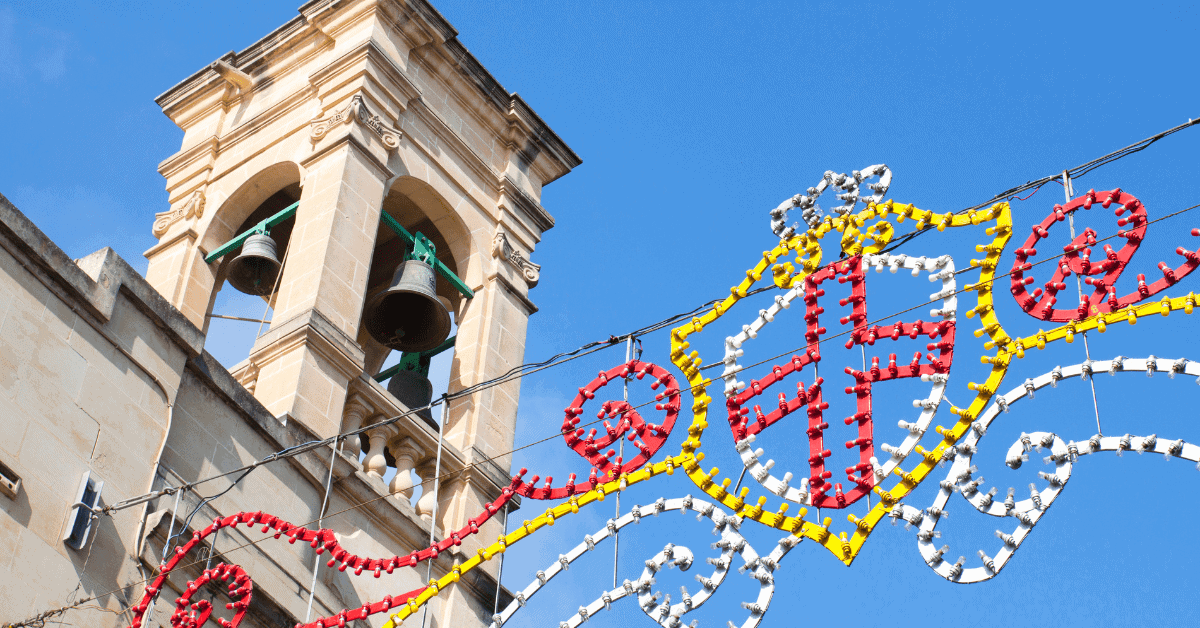
- Street Decorations: Villages are adorned with colourful banners, twinkling lights, and statues of saints.
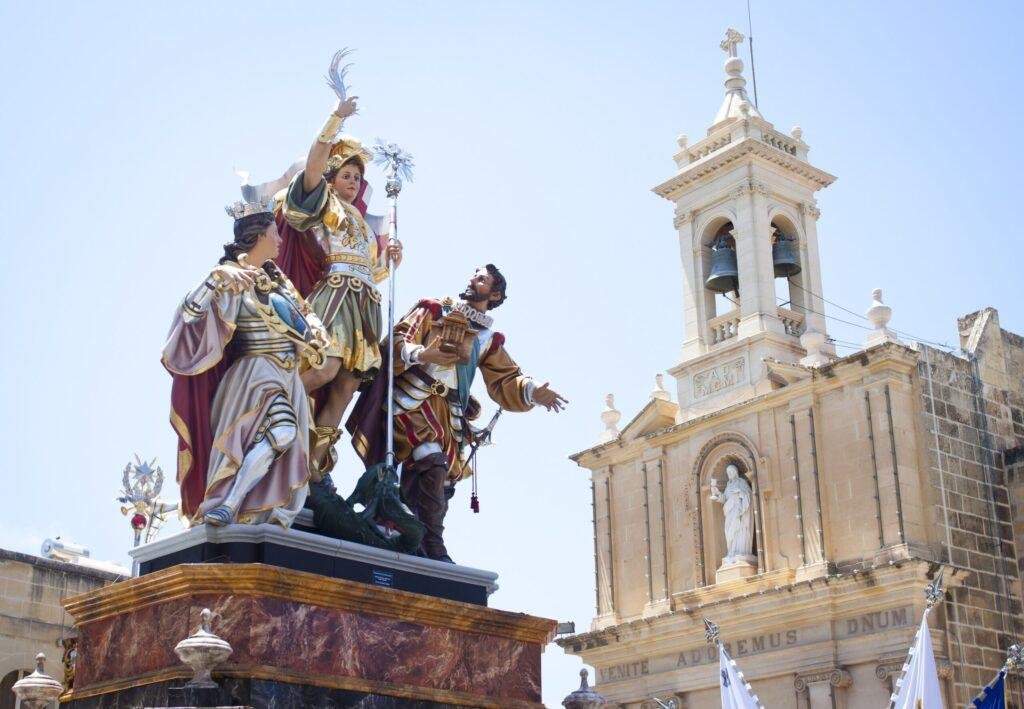
- Processions: At the heart of most feasts is the statue procession. The parish saint’s statue is brought out of its alcove and carried through the village streets to a decorative platform, where it remains for a period before being returned to the church. It sounds simple, but in practice it’s one of the most quietly moving things you can witness on Gozo.
Some villages have multiple processions within a single feast. Kerċem is a good example: the feast of Our Lady of Succour involves three. First comes the children’s procession, where the parish youth carry a smaller statue of Our Lady through the streets. Then there is the procession of the Two, which features a large statue of Our Lady alongside St Gregory, the village’s other patron saint. Finally, the main procession carries the large statue of Our Lady herself. - Band Marches: Brass bands parade through streets playing traditional Maltese music.
- Fireworks: Spectacular pyrotechnic displays light up the skies both day and night.
- Food Stalls: Enjoy local delicacies like mqaret (date pastries), nougat, and pastizzi.
- Unique Traditions: Some villages incorporate special activities like horse racing or artistic displays.
Festa Etiquette
A feast belongs to the village hosting it first and the visitors second, so a few small courtesies go a long way.
Dress for the church, not the fireworks. If you duck inside during Mass or before the procession starts, cover shoulders and knees. Shorts and vest tops are fine for the street, less so for the pews.
Give the statue room. When the procession comes through, step to the side and let it pass. It is not staged for photographs from the middle of the road.
Ask before photographing up close. Band members and families in traditional dress are usually happy to be in a shot from a distance, less so with a phone lens a foot from their face.
Support the stalls. Food and drink stalls at a feast are almost always run by the band club or parish rather than outside vendors, so a plate of imqaret or a beer there puts money straight back into the celebration.
If you’re planning to eat at a restaurant, it pays to book ahead as they will be busy.
Top Tip: If you are not sure whether an area is open to visitors, watching what the locals around you do is the safest guide.
Unique Village Traditions
One of the wonderful things about Gozo’s Feasts, is that some villages take their feasts to another level by incorporating distinctive customs:
Għarb’s Infiorata (Feast of the Visitation)
In Għarb, a floral carpet (Infiorata) is created using thousands of flower petals arranged into intricate designs.
On feast day, the statue of Our Lady is carried over this carpet during a solemn procession.
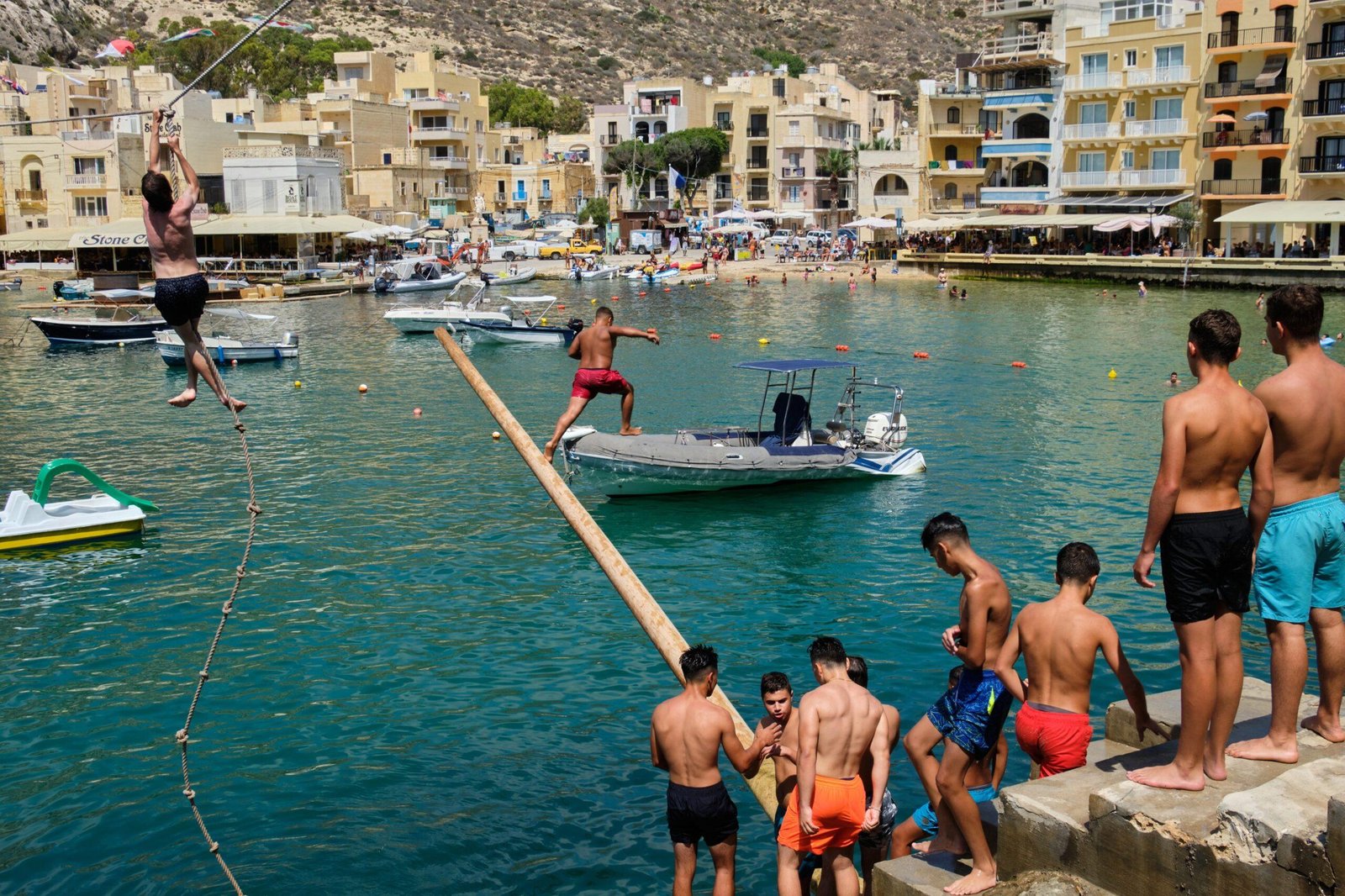
Xlendi’s Greasy Pole (ġostra)
The highlight of Xlendi’s feast is watching the attempts to walk along a greased pole suspended over the bay to grab a flag. Most attempts end in the water, which is rather the point.
Għajnsielem’s Cloth Tradition (Our Lady of Loreto)
In a tradition dating back to the 1980s, each year a unique and distinctive cloth is selected and villages buy lengths of it to craft into matching garments.
Santa Marija Horse Races (Victoria)
Horses race up Republic Street, which used to be called Racecourse Street, in Victoria.
Tips for Enjoying Gozo’s Feasts
- Plan Ahead: Check dates in advance as accommodations fill up quickly during feast weekends. You’ll usually find updates on the village church’s facebook page.
- Arrive Early: Secure a good viewing spot for parades or fireworks.
- Embrace Local Cuisine: Don’t miss out on traditional treats like nougat or mqaret.
- Dress Comfortably: Light clothing is ideal for summer feasts; bring layers for winter events.